
Press releases

New DZHK junior research group leader follows trail of "escaped" genes

Many diseases progress differently in women and men. There are often differences in the way they develop. This also applies to cardiovascular…

Read more

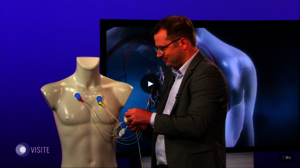
What to do when the heart stumbles?

In a television report on the NDR health programme Visite, Prof. Dr Rolf Wachter from Göttingen University Hospital reports on how atrial fibrillation…

Read more

Role of psychological factors in heart failure comprehensively analysed for the first time
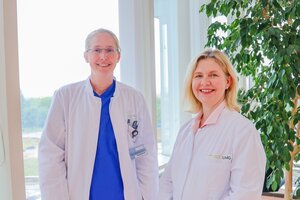
Twelve European experts have been commissioned by the European Association of Preventive Cardiology (EAPC) to analyse the scientific status and…

Read more

New DZHK study to reduce scarring in narrowed heart valves
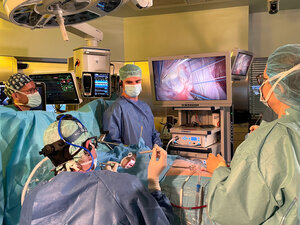
Despite successful treatment of narrowed aortic valves by catheter-assisted aortic valve implantation (TAVI), patients with severely scarred hearts…

Read more

Simultaneous mitral and tricuspid valve surgery has advantages (CTSN-TVR-DZHK14 study)

Should the tricuspid valve be treated at the same time as the mitral valve reconstruction? In cases of mild tricuspid valve insufficiency, cardiac…

Read more

Alexander Bartelt receives research award from the German Obesity Society
Fat cells are much more than simply a calorie storage for scarce times. DZHK scientist Alexander Bartelt studies the role of healthy fat cells in…

Read more

A thickened heart muscle increases the risk of brain structures breaking down

People with a thickened heart muscle (cardiac hypertrophy) have a thinner cerebral cortex and white matter damage. Scientists from the German Center…

Read more

Immediate angiograms not always necessary after cardiac arrest (Study TOMAHAWK-DZHK4)

Immediate angiograms are not necessary, and can even cause worse outcomes, after a cardiac arrest where there is no obvious cause. These are the…

Read more

Implanted heart monitor can predict life-threatening complications after heart attack (Study SMART-MI-DZHK9)
After a heart attack, an implanted heart monitor can better detect those at risk of serious complications, when compared to conventional follow-up…

Read more

Heart function in COVID-19 usually only temporarily impaired

SARS-CoV-2 infection can weaken the heart, but it recovers in most patients after two months. Munich scientists from the German Centre for…

Read more