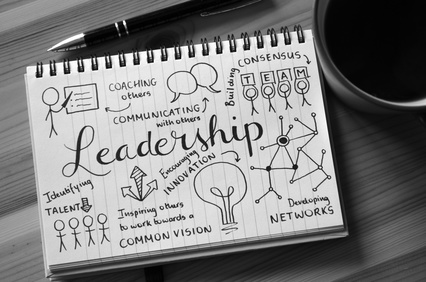
How does one recognise good leadership?
By its impact. The individual employees and the manager are satisfied on the whole and can unfold their specific capabilities. The tasks and problems at hand can be solved and handled. Team members complement each other in their differences and are able to resolve conflicts that arise. Communication with other parts of the organisation, partners and customers runs smoothly.
The director of a clinic once said that he can determine which department in the clinic is managed well and which isn’t solely based on the figures on his desk. In well-managed departments the patient satisfaction is high and the number of days that employees are ill is low. It’s simply not enough for a head physician to be an expert in his field. One also needs to be capable of organising and structuring the teamwork in such a way that the tasks at hand are solved well and the individuals feel comfortable and in the right place. The satisfaction of each individual has an impact on the interaction within the team, the productivity and success.
Which management style is the right one?
No single management style is best. It depends upon the task, the culture, the industry, the counterpart. The situational leadership style has proven to work well in our current cultural environment. In other words, one tries to identify the needs and abilities of the counterpart. Tighter control, guidance, supervision because the person is not yet in a position to take full responsibility for the task? Or greater freedom, trust, independence because the person has the necessary skills and feels suffocated or unwell with a “command and control” approach to leadership? Thus, it’s neither good nor fair to treat all people in the same way, but far better to lead each individual to suit their present circumstances and current skills and personality profile. Merely observing is not enough for this purpose. It also requires a conversation with the respective person in order to verify one’s own perception and reach agreements with the counterpart. Factors arising out of the situation also come into play. Under time pressure authoritarian decisions are justified and, in some cases, absolutely necessary. In order for employees to become enthusiastic about an idea and follow through with it actively and responsibly to the end, it’s generally better to develop and define the approach collaboratively, in other words to lead cooperatively.
Personal values
In general, it’s easier to manage employees who “tick” in a similar way to us. People who, for example, have a similar understanding of order, autonomy and attention to detail to our own. People whose idea of right or wrong differs strongly from our own are often unwittingly devalued. Someone who isn’t as orderly as oneself is then deemed to be chaotic or someone who isn’t as ambitious, well-organised or efficient as oneself comes across as sluggish, lazy and unmotivated. But people, whom we subjectively devalue, wittingly or unwittingly, are difficult to lead. The counterpart will feel misunderstood and not properly appreciated. That’s why it’s helpful to be aware of what characterises me and my personality? What is important to me? And where do my standards collide with others? What will others find problematic if I impose my standards upon them? Situational leadership is focussed on the counterpart, their strengths and potential. If one is aware of one’s own values and standards, areas of conflict can be recognised faster. Then one can realistically acknowledge the characteristics of the counterpart and adjust one’s own expectations and behaviour in accordance with the other person’s potential.
Relationships are the key
In most cases it’s not possible to choose one’s employees or boss. Managers are, therefore, sometimes confronted with the challenge of building stable working relationships with people with whom they have nothing in common or may not even like. If I want to lead someone when working together, i.e. to influence them and their behaviour, the relationship is critical. I must build up contact with the person and motivate them to do what is required in the specific context. The degree of closeness or distance an employee needs in their working relationship with their manager in order to do the job well varies greatly. Some need a lot of interest, attention, contact, expressed appreciation and esteem – others are happy when they receive interesting tasks and can work on these largely autonomously, without being constantly monitored or bothered. In order to develop relationships constructively with very different types of people, the manager must broaden their inner repertoire. A manager with a free-reign leadership style, who gives few instructions, may need to learn to guide and supervise some employees more closely, to give them structure and also set boundaries, even when this goes against their own nature. A boss who likes to exercise tight control and oversee everything may need to learn to trust other competent members of their team, to give them freedom to do things as they see best, as long as the outcome is good. Leadership and the further enhancement of one’s own leadership style, therefore, always involves the task of reflecting on one’s own behaviour and relationships with others, as well as working on oneself, one’s personality and interpersonal skills.
Who am I? And if yes, how many?
In a management position one takes on many different roles: as a disciplinary supervisor who allows or forbids certain things, i.e. who is responsible for adherence to the rules of the organisation; as a manager who sees to it that the work is carried out optimally and according to rules in collaboration with the employees; often as an expert in the relevant field who possesses particular expertise in specific subject areas and must be able to provide information; as a coach who actively fosters the skills and talents of individual team members and gives them the tasks/support to enable this; as a facilitator for approval processes and conflict resolution in the team; as a representative of the organisation who implements the guidelines of higher management in their own department, etc. Further roles may also come into play depending on the environment and task. It becomes apparent, nevertheless, that every role involves different goals and communication patterns. The big challenge for a manager is to recognise what is required of me in the respective situation and in what role I see myself and would like to answer? As a coach, I would like the other person to develop solutions and become more independent, so I won’t give clear instructions. By contrast, as a specialist in the field working under pressure one will need to give clear instructions. As a disciplinary supervisor one must also set, explain and impose boundaries, if necessary without mutual agreement at times. As a facilitator, one helps others to find amicable solutions and only provides the required structure and guidance to achieve this. Managers who are closely involved in the daily operations often reach their limits because they cannot satisfy the different demands of the diverse roles as a leader. A prerequisite for good leadership is, therefore, sufficient time to fulfil the management task.
Authenticity
Does he truly mean what he’s saying? Does she really think that I…? Employees should be able to believe you. One can’t be 100 % authentic in every situation. If one were, it would also be possible to say: “Go away, you’re getting on my nerves.” That would be very authentic but not a recommendable form of communication for a manager. The psychoanalyst and founder of Theme-Centered Interaction (TCI), Ruth Cohn, developed the definition of “selective authenticity”. Don’t say everything that you think, but what you say must be true and you must be able to take accountability for it. A consistent person, whose words are credible, has greater authority as a manager than one who is perceived to be tactical and about whom one regularly thinks: Does he really mean that? Why is she saying that now? Selective authenticity requires inner clarity. I must be aware of my thoughts, attitudes and emotions in order to decide what I can expect my counterpart to handle in the current situation and what would be inappropriate. Here again it becomes apparent that a manager needs a high capacity for self-reflection and self-confidence to be able to positively influence employees and the team and to be perceived as a trustworthy, serious counterpart. Leadership style is not a technique that is learnt, but far more an approach to people and tasks which comes to the fore time and again in daily work, which must be consistent and must stand the test of time.


